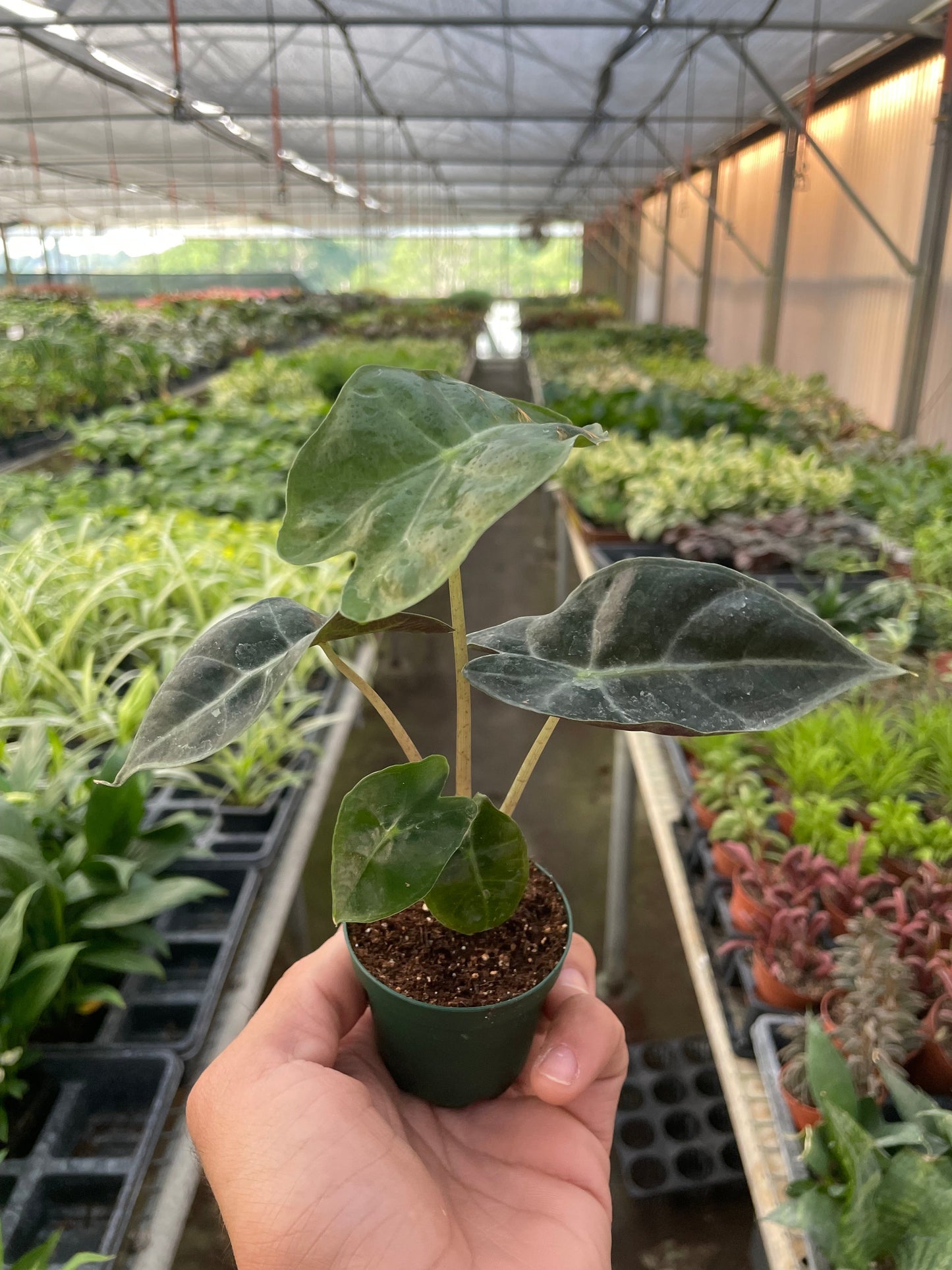
Alocasia Polly 'African Mask'
Alocasia Polly 'African Mask'
Couldn't load pickup availability
Some plants blend into a room. The Alocasia Polly does the opposite. Those leaves, deep green and glossy with bright white veins running through them like brushstrokes, stop people in their tracks. It's the kind of plant that gets asked about at parties.
Named for its resemblance to ceremonial African masks, the Polly is a compact variety of Alocasia, which means you get all the drama without needing a room with extra ceiling height. It grows in bursts, a new leaf unfurling every few weeks when it's happy, each one more sculptural than the last. It goes dormant in winter and can look a bit ragged during that stretch, but come spring it reliably comes back. That's worth knowing before you panic.
This is a plant for someone who wants something genuinely striking on their shelf and is willing to pay a little more attention to earn it.
Why You'll Love It
The Alocasia Polly rewards close observation. You'll find yourself checking for new growth, noticing the way the leaves shift toward the light, watching the veins catch the afternoon sun. It's one of those plants that makes you a more attentive plant parent whether you planned to be or not. Research consistently shows that caring for plants reduces stress and sharpens focus. The Alocasia, with its theatrical presence and steady rhythm of growth, makes that easy to believe.
Care at a Glance
- Light: Bright indirect light. Keep out of direct sun, which scorches the leaves
- Water: When the top inch of soil feels dry. Keep consistently moist but never waterlogged
- Humidity: Needs high humidity, ideally above 60%. Mist regularly or use a humidifier
- Temperature: Prefers 65 to 80 degrees F. Keep away from cold drafts
- Growth: Active in spring and summer. Goes dormant in winter
- Skill level: Intermediate. Rewards consistent attention to humidity and watering
- Pet safety: Toxic if ingested. Keep away from pets and small children
Good to Know
The Alocasia Polly is sometimes called Elephant Ears, though that name gets used loosely across several Alocasia varieties. If you see yellowing leaves, it's usually a humidity or watering issue rather than a sign of real trouble. Give it a pebble tray, ease back on the watering slightly, and it typically recovers on its own.
For more care tips, visit our Plant Care Library.
Share