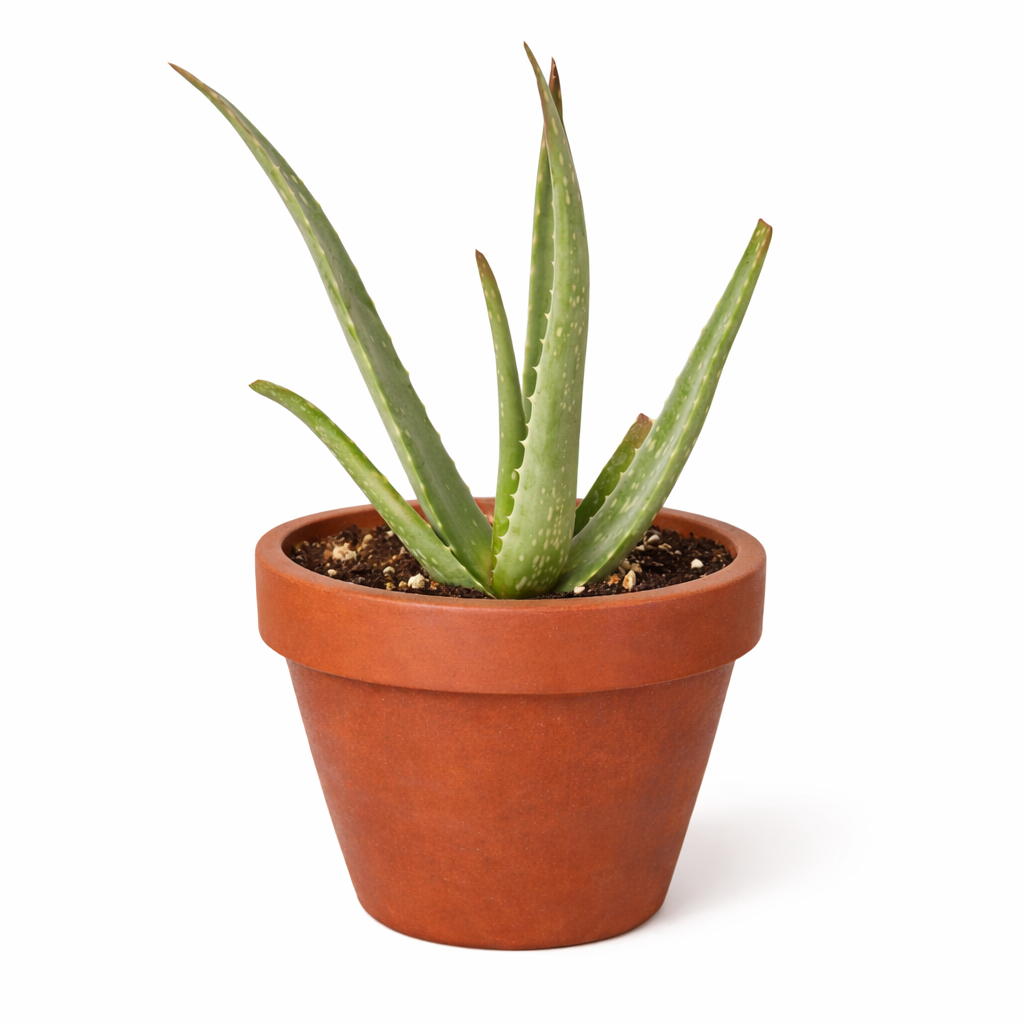
There's a reason Aloe Vera has been kept in homes for thousands of years. It shows up on apothecary shelves, in grandmother's kitchens, on bathroom counters — always within reach, always useful. The thick, fleshy leaves hold a clear gel that's been used for burns, skin irritation, and wound care for millennia. It's one of the few plants that genuinely earns its place twice: once for how it looks, once for what it does.
Aloe barbadensis miller is a succulent that thrives on neglect. It stores water in its leaves, which means it can go weeks without being watered and show no sign of complaint. It grows slowly, stays compact for years, and asks for little more than a sunny windowsill and well-draining soil. For anyone who wants a low-maintenance plant that also functions as a first-aid kit, there's nothing better.
This is a plant you'll be glad you have the first time you reach for it.
Why You'll Love It
The Aloe Vera is one of the most genuinely useful plants you can keep indoors. Snap a leaf, apply the gel directly to a minor burn or irritated skin, and you'll understand immediately why it's been cultivated for so long. Beyond its practical value, it's a striking plant — architectural, sculptural, and slow-growing in a way that makes each new rosette feel earned.
Care at a Glance
-
Light: Bright indirect to direct light. A south or west-facing window is ideal
-
Water: Water deeply, then allow the soil to dry completely before watering again. Every 2 to 4 weeks in summer, less in winter
-
Humidity: Tolerates low humidity. No misting needed or desired
-
Temperature: Prefers 60 to 80 degrees F. Not frost-hardy
-
Growth: Slow to moderate. Produces offsets (pups) from the base over time
-
Skill level: Beginner-friendly. Very forgiving as long as it's not overwatered
-
Pet safety: Toxic to pets if ingested. Keep away from cats and dogs
Good to Know
Overwatering is the fastest way to harm an Aloe — the leaves will turn yellow and mushy at the base if the roots are sitting in too much moisture. Well-draining cactus or succulent mix, combined with a pot that has drainage holes, solves the problem before it starts. Pups (offsets) that appear at the base can be separated and potted on once they're a few inches tall.
For more care tips, visit our Plant Care Library.