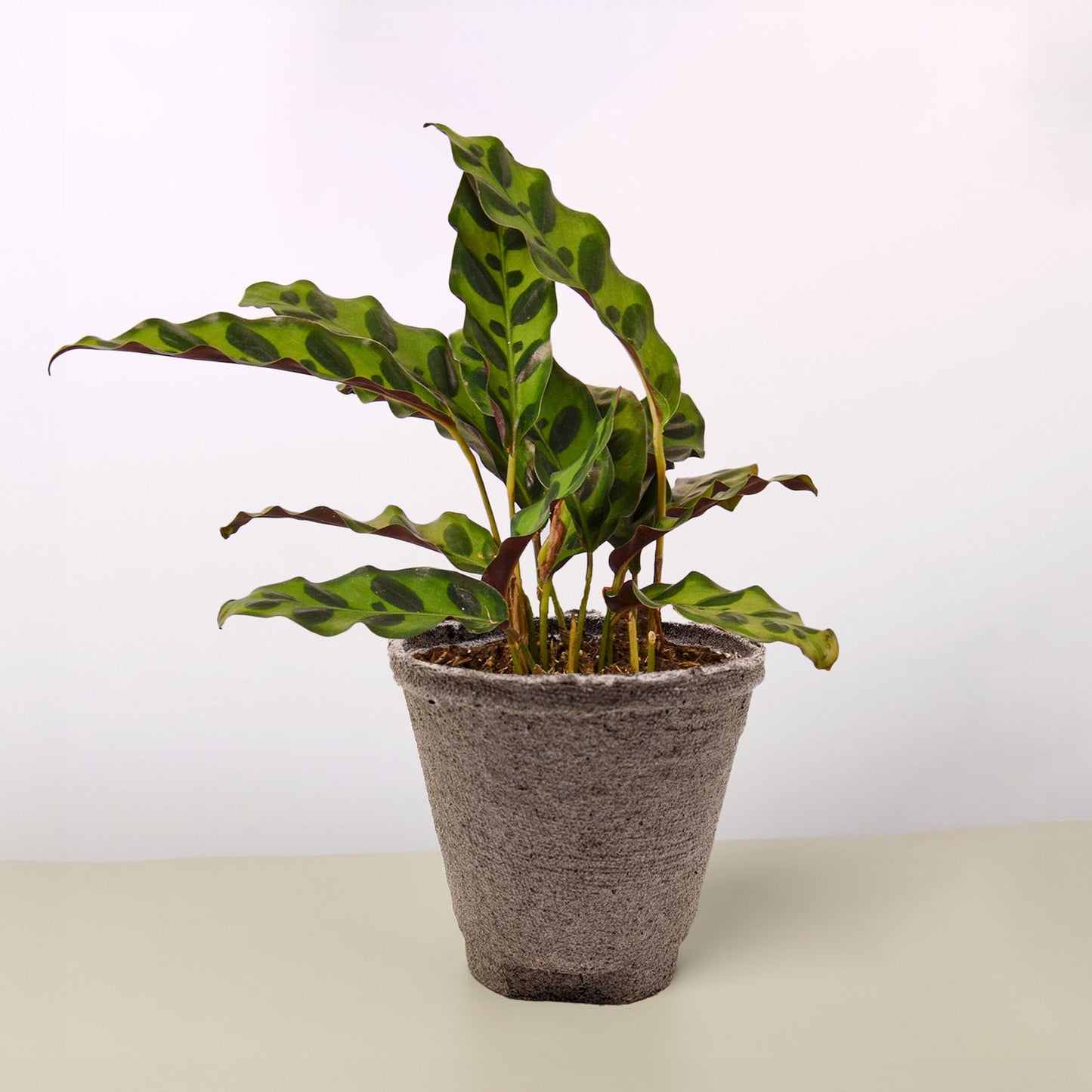
Calathea Lancifolia 'Rattlesnake'
Calathea Lancifolia 'Rattlesnake'
Couldn't load pickup availability
The Rattlesnake Plant gets its name from the pattern on its leaves long, narrow fronds marked with irregular dark green spots along a lighter green background, like the scales of a snake. The undersides are a deep burgundy-purple. It's a plant that rewards looking closely, and looking from a distance. Both views are worth having.
Goeppertia lancifolia formerly classified as a Calathea is part of the prayer plant family, which means it moves. At night, the leaves fold upward like hands in prayer and unfurl again in the morning. Living with a plant that responds visibly to the rhythm of the day has a quality that's difficult to describe until you've experienced it. The care requires a little more attention than a Pothos, but it's entirely manageable.
This is a plant that's doing something, even when you're not watching.
Why You'll Love It
The Rattlesnake Plant's movement is the thing most people don't expect and then can't stop noticing. The daily folding and unfolding of the leaves is a gentle, living reminder that plants respond to the world around them. Beyond the behavior, the patterning on the leaves is genuinely extraordinary: no two leaves are marked exactly alike, and the contrast between the spotted top and the purple underside is striking in any light.
Care at a Glance
- Light: Medium to bright indirect light. Avoid direct sun, which can bleach the markings
- Water: Keep soil consistently moist but not waterlogged. Use filtered or room-temperature water if possible
- Humidity: Loves high humidity. A pebble tray, humidifier, or bathroom placement is ideal
- Temperature: Prefers 65 to 80 degrees F. Sensitive to cold drafts and sudden temperature changes
- Growth: Moderate. Stays compact typically 18 to 24 inches tall
- Skill level: Intermediate. Humidity and water quality matter more than with most plants
- Pet safety: Non-toxic to pets and humans. A safe choice for homes with animals
Good to Know
Brown leaf tips are the most common issue with Rattlesnake Plants, and they're almost always caused by low humidity or tap water with high fluoride content. Switching to filtered, distilled, or collected rainwater makes a noticeable difference. If the tips are browning, trim them with clean scissors at an angle the plant will keep growing and the new leaves will be fine.
For more care tips, visit our Plant Care Library.
Share