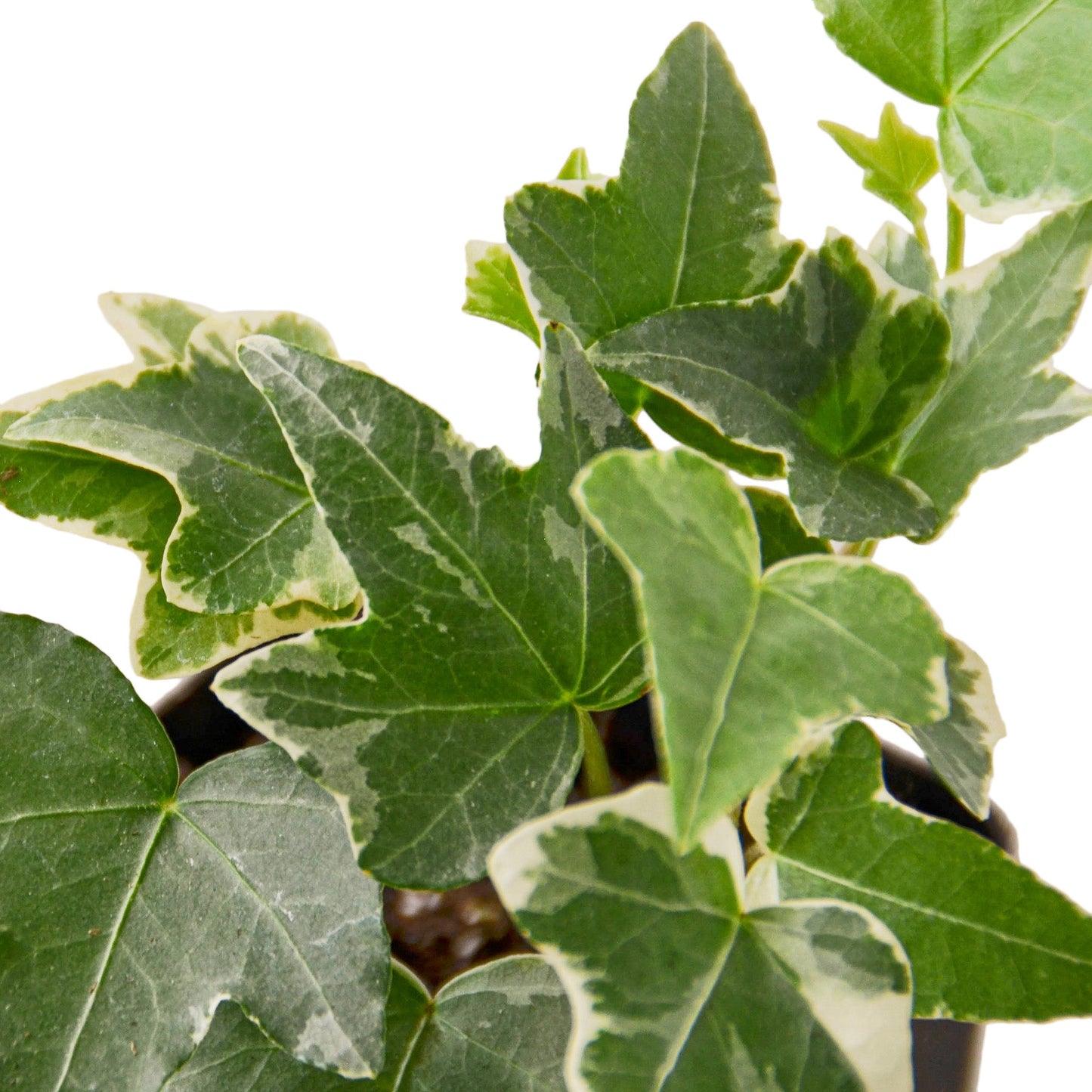
The Glacier Ivy is the kind of plant that works everywhere. It trails from a high shelf, climbs a trellis, spills over the edge of a bookcase, or sits neatly in a hanging planter — adapting to wherever you put it with the easy versatility that has made ivy one of the most enduringly popular houseplants in the world. The Glacier variety adds a twist: the leaves are variegated in grey-green, cream, and white, with an irregular pattern that gives it a more refined, contemporary quality than standard green ivy.
Hedera helix 'Glacier' grows quickly in good conditions and can fill a space with lush, cascading foliage in a surprisingly short time. It tolerates lower light, cooler temperatures, and the occasional missed watering with equanimity. It's also one of the better air-purifying plants available — a legitimate benefit, not just marketing language.
This is a plant that goes wherever you need it and does the job beautifully.
Why You'll Love It
The Glacier Ivy's variegation gives it a sophistication that plain green ivy doesn't have — the cream and grey tones read as intentional and considered in a way that works especially well in neutral or minimalist interiors. It's also one of the fastest trailing plants to establish, which means you get the effect you're after quickly rather than waiting years for trails to develop.
Care at a Glance
-
Light: Bright indirect light preferred, but tolerates medium to low light well. The variegation is most vivid in brighter conditions
-
Water: Allow the top inch of soil to dry between waterings. Avoid overwatering
-
Humidity: Tolerates average indoor humidity. Appreciates occasional misting in dry conditions
-
Temperature: Prefers 50 to 75 degrees F. One of the cooler-tolerant houseplants
-
Growth: Fast in good light. Trails readily and can reach several feet in length
-
Skill level: Beginner-friendly. Very forgiving and adaptable
-
Pet safety: Toxic if ingested. Keep away from pets and small children
Good to Know
Ivy can be prone to spider mites in dry conditions — keep an eye on the undersides of leaves, especially in winter when indoor air tends to be drier. A monthly shower in the sink or a regular misting routine keeps the mites at bay. Trimming back leggy or overgrown stems encourages bushier growth and keeps the plant looking tidy. The cuttings root easily in water if you want to propagate.
For more care tips, visit our Plant Care Library.