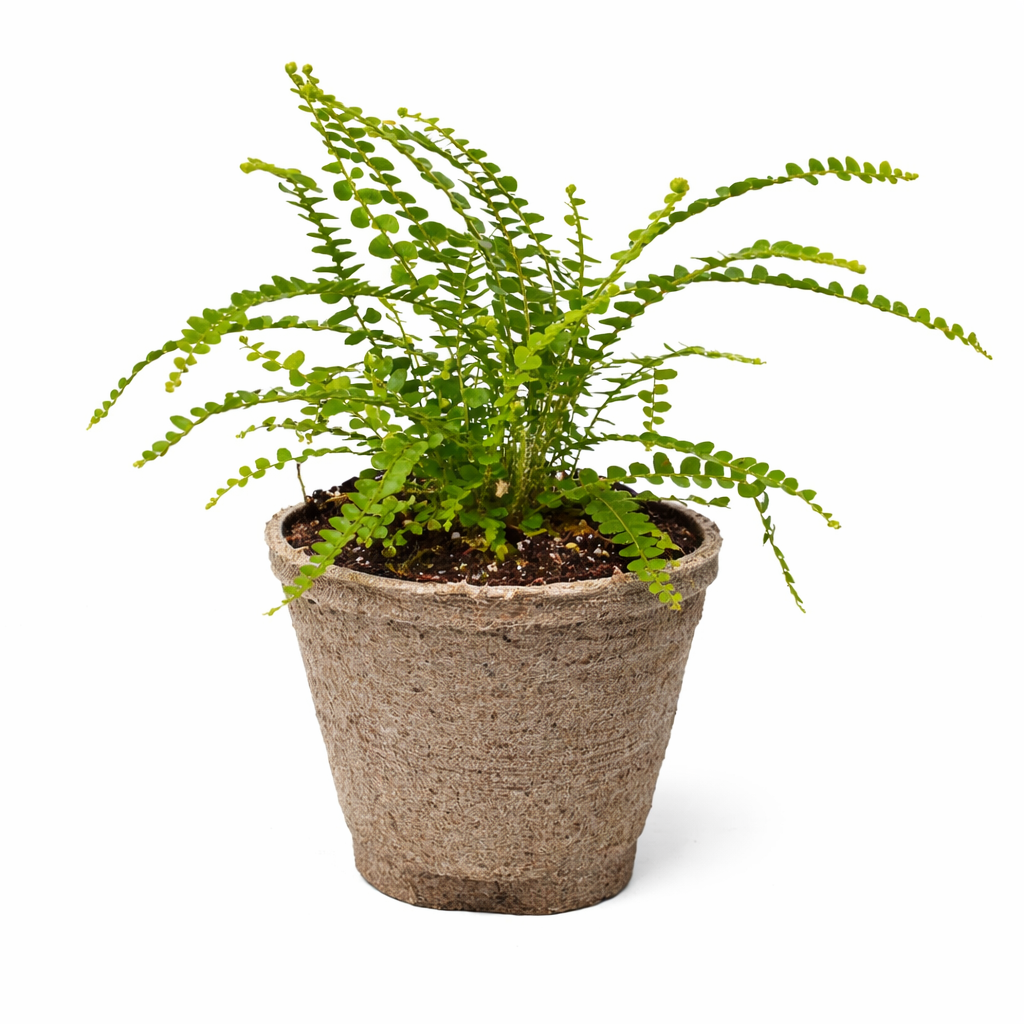
The Lemon Button Fern is what happens when a Boston Fern goes compact. Same arching habit, same fine-textured fronds, same love of humidity but scaled down to something that fits on a shelf, a bathroom counter, or a desk without taking over the space. The small, rounded leaflets have a slightly waxy finish and a faint citrusy scent when brushed, which is where the name comes from.
Nephrolepis cordifolia 'Duffii' is a tidier, more well-behaved fern than most of its relatives. It doesn't shed fronds constantly or demand constant attention it just grows steadily and looks good doing it. It's genuinely one of the easier ferns to keep indoors, which makes it a great entry point for anyone who's wanted a fern but felt intimidated by the category.
This is the fern that fits into the life you actually have.
Why You'll Love It
The Lemon Button's compact size is its superpower. It fills small spaces that larger plants can't a bathroom shelf, a windowsill, the corner of a desk and it does it with the lush, layered texture that makes ferns so appealing. The faint lemon scent is a small, lovely bonus that most people discover by accident.
Care at a Glance
-
Light: Medium to bright indirect light. Tolerates lower light but grows more slowly
-
Water: Keep soil consistently moist. Avoid allowing it to dry out completely
-
Humidity: Appreciates higher humidity. A bathroom or kitchen is a good home for it
-
Temperature: Prefers 60 to 75 degrees F. Keep away from cold drafts
-
Growth: Moderate. Stays compact typically 12 inches tall and wide
-
Skill level: Beginner-friendly. One of the most manageable ferns for indoor growing
-
Pet safety: Non-toxic to pets and humans
Good to Know
The Lemon Button is more drought-tolerant than most ferns it can handle the occasional missed watering without the immediate frond-drop that a Maidenhair would throw at you. If the fronds start to yellow, check the soil first: it's usually either too dry or too wet, and the fix is straightforward. Brown tips typically mean the air is too dry move it closer to a water source or add a pebble tray.
For more care tips, visit our Plant Care Library.