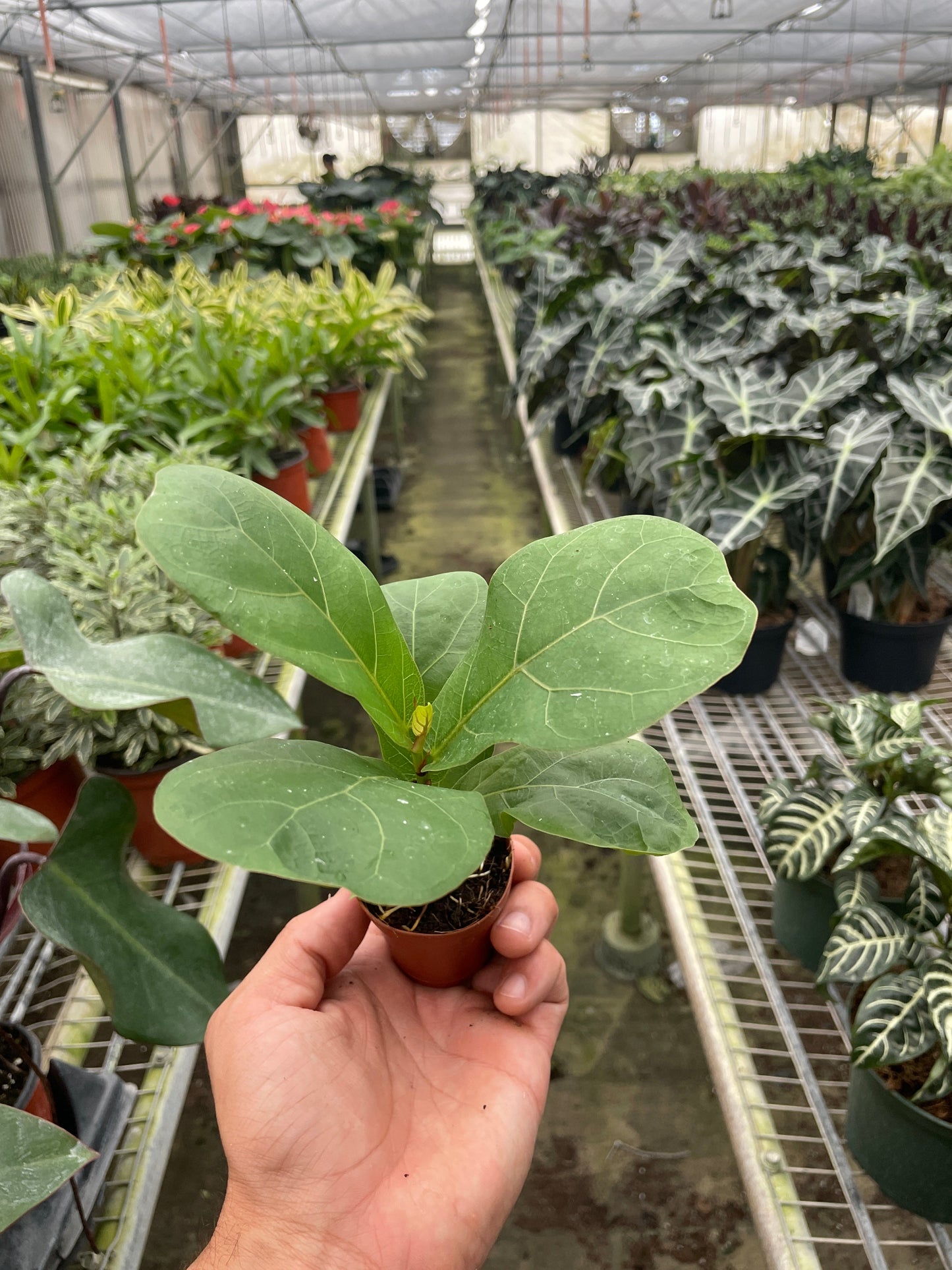
Fiddle Leaf Fig
Fiddle Leaf Fig
Couldn't load pickup availability
At some point in the last decade, the Fiddle Leaf Fig became the plant. It's on every mood board, every interior design blog, every "how to make your home look like a magazine" article ever written. The reason is the leaves: large, violin-shaped, deeply veined, and a rich dark green that photographs beautifully and looks even better in person. The hype, for once, is deserved.
Ficus lyrata is a statement plant in the truest sense — it commands a room. In good light and a large pot, it grows into a genuine indoor tree. It does have opinions about its care: it prefers consistency, dislikes being moved, and will drop leaves to communicate displeasure. But learn what it likes and it becomes one of the most rewarding plants you can grow. The relationship is worth building.
This is the plant that makes a room look intentional.
Why You'll Love It
The Fiddle Leaf Fig has held its status as the definitive interior plant for years, and it's not showing signs of fading. There's a reason for that staying power: nothing else quite replicates the combination of sculptural form and lush, oversized foliage it brings. In a bright corner with a good pot, it reads as a design decision as much as a plant purchase.
Care at a Glance
- Light: Bright indirect light, ideally near a large window. Consistent light is key — avoid moving it once it's settled
- Water: Allow the top inch or two to dry before watering. Consistent but not excessive
- Humidity: Appreciates moderate to high humidity. Avoid dry heating vents
- Temperature: Prefers 65 to 80 degrees F. Very sensitive to drafts, cold windows, and sudden changes
- Growth: Slow to moderate. Can become a large tree indoors given time and space
- Skill level: Intermediate. Rewards consistency and punishes disruption
- Pet safety: Toxic if ingested. Keep away from pets and small children
Good to Know
Leaf drop is the Fiddle Leaf's primary form of communication. Moving the plant, a sudden change in temperature, overwatering, or underwatering can all trigger it. When you first bring one home, pick a bright spot and leave it there — don't rotate it, don't move it to a new room, don't panic if a few leaves drop during the adjustment period. Once settled, it stabilizes. Wiping the large leaves with a damp cloth keeps them clean and maximizes the light they absorb.
For more care tips, visit our Plant Care Library.
Share