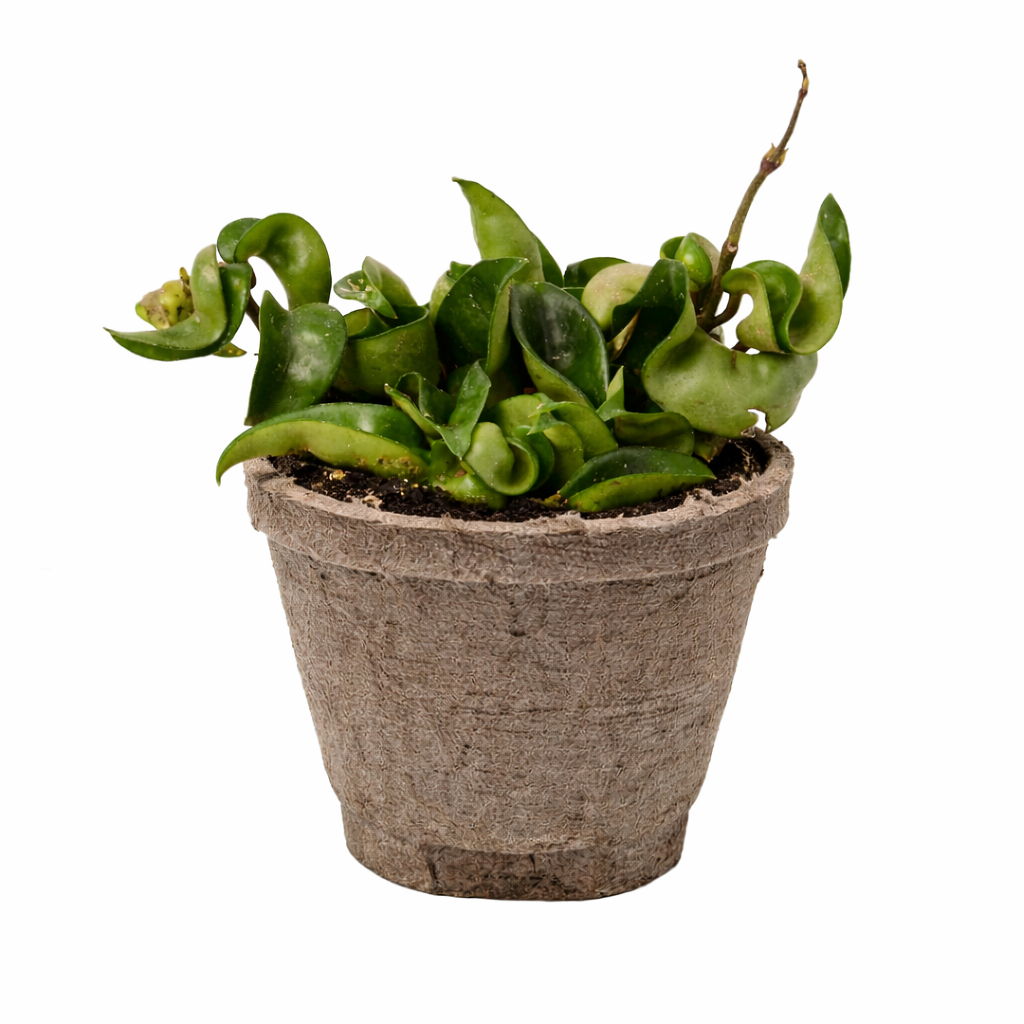
The Hoya Rope Plant is one of the stranger, more wonderful things you can grow indoors. Its leaves are thick and waxy, twisted and curled into themselves like little scrolls, densely packed along trailing stems that can reach several feet in length. Up close it's almost architectural. From a distance it looks like a living sculpture hanging from a shelf.
Hoya carnosa compacta grows slowly and patiently, and rewards that patience with occasional clusters of small, star-shaped flowers that appear from the same spurs year after year. The flowers are waxy, intensely fragrant, and slightly surreal — each cluster looks almost artificial. The plant asks very little: bright indirect light, infrequent watering, and the understanding that it operates on its own timeline.
This is a plant for people who appreciate things that are quietly extraordinary.
Why You'll Love It
The Hoya Rope Plant is one of those plants that grows on you — literally and figuratively. The twisted leaves are a genuine conversation piece, the fragrant flowers are a seasonal reward, and the low-maintenance care means it can live in your home for years with very little intervention. It's also one of the longest-lived houseplants you can keep: with good care, a Hoya Rope can outlast most other plants in your collection by decades.
Care at a Glance
-
Light: Bright indirect light preferred. Some direct morning sun is beneficial
-
Water: Allow the soil to dry almost completely between waterings. Reduce further in winter
-
Humidity: Tolerates average indoor humidity well. No misting required
-
Temperature: Prefers 60 to 80 degrees F. Keep away from cold drafts
-
Growth: Slow. Patience is rewarded — the plant matures beautifully over time
-
Skill level: Beginner-friendly. Thrives on the low-maintenance approach
-
Pet safety: Non-toxic to pets and humans
Good to Know
Never remove the flower spurs after blooming — the plant produces new flowers from the same spurs each season, and removing them means waiting an extra year for the next bloom. The Rope Plant also dislikes being repotted unnecessarily; it actually blooms more readily when slightly root-bound. Leave it alone and let it do its thing.
For more care tips, visit our Plant Care Library.