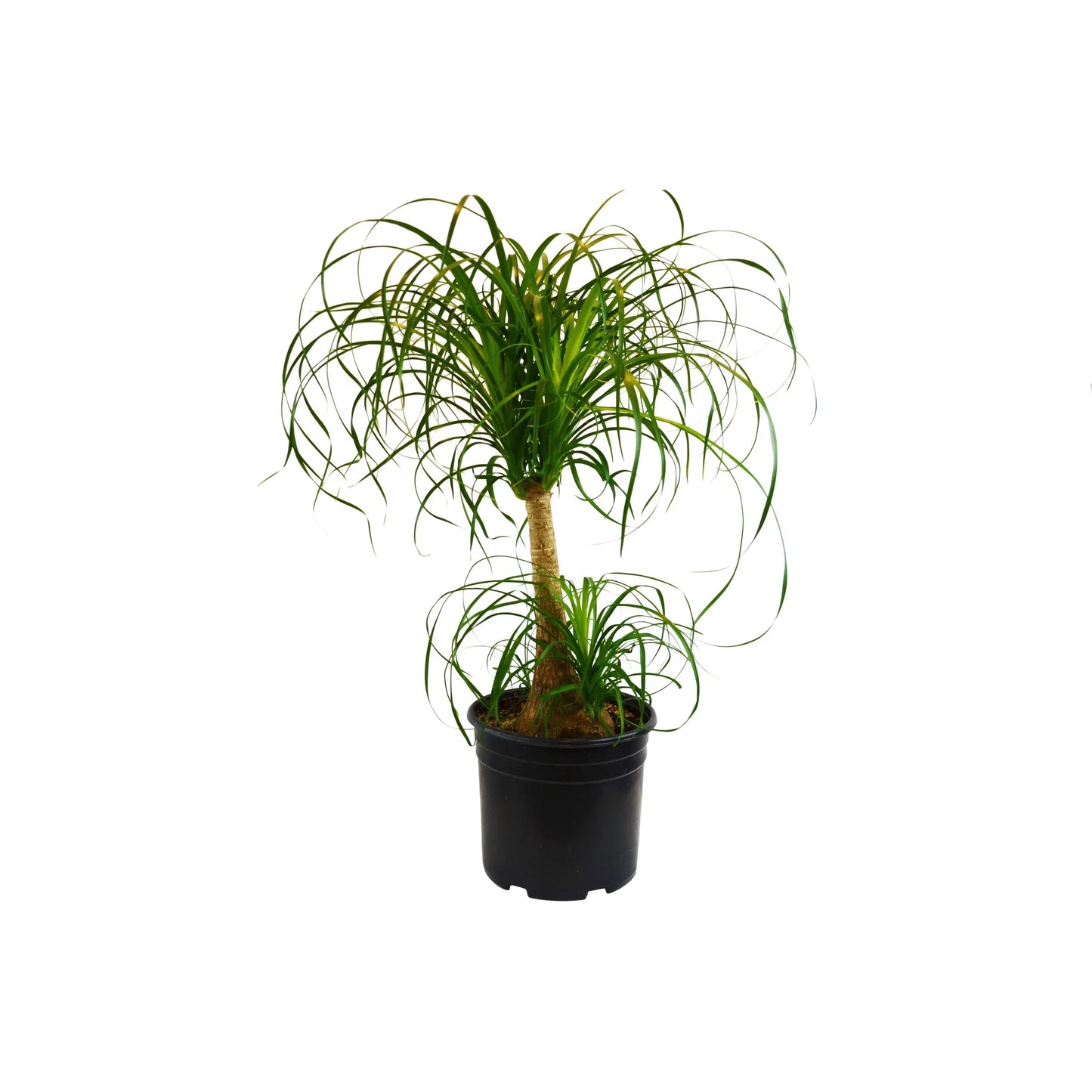
Ponytail Palm
Ponytail Palm
Couldn't load pickup availability
The Ponytail Palm is not actually a palm. It's a succulent — a member of the agave family — which explains why it's so spectacularly drought tolerant and why the swollen base of its trunk, called a caudex, stores water like a reservoir. The long, arching leaves that cascade from the top give it the ponytail silhouette, and the whole plant has a cheerful, slightly eccentric quality that makes it hard not to like.
Beaucarnea recurvata grows slowly and lives for a very long time — decades, in the right conditions. In a small pot it stays compact and desktop-friendly; given a larger container and years to develop, it becomes a genuine specimen plant with real architectural presence. Either way, it asks very little: bright light, infrequent watering, and the occasional compliment.
This is the plant for people who travel, forget things, or simply don't want to worry.
Why You'll Love It
The Ponytail Palm is one of the most genuinely low-maintenance plants you can keep indoors. Its water storage means it can go weeks — sometimes months — between waterings without showing stress. It grows slowly enough that it stays in proportion with its space for years. And it has a personality that's difficult to articulate but immediately recognizable: there's something inherently joyful about a plant with a topknot.
Care at a Glance
- Light: Bright indirect to direct light. Thrives in a sunny window
- Water: Water deeply, then allow soil to dry completely before watering again. Very drought tolerant
- Humidity: Tolerates low humidity. No misting needed
- Temperature: Prefers 60 to 80 degrees F. Tolerates heat well. Not frost-hardy
- Growth: Slow. A long-lived plant that improves significantly over time
- Skill level: Beginner-friendly. One of the most forgiving plants available
- Pet safety: Non-toxic to pets and humans
Good to Know
The swollen base of the Ponytail Palm is its water tank — resist the urge to water frequently, as overwatering is the one real way to harm this plant. Root rot from sitting in wet soil is the main threat. Well-draining cactus or succulent mix in a pot with drainage holes eliminates the risk almost entirely. Brown tip on the leaves is normal and doesn't indicate a problem — it's just a characteristic of the species.
For more care tips, visit our Plant Care Library.
Share