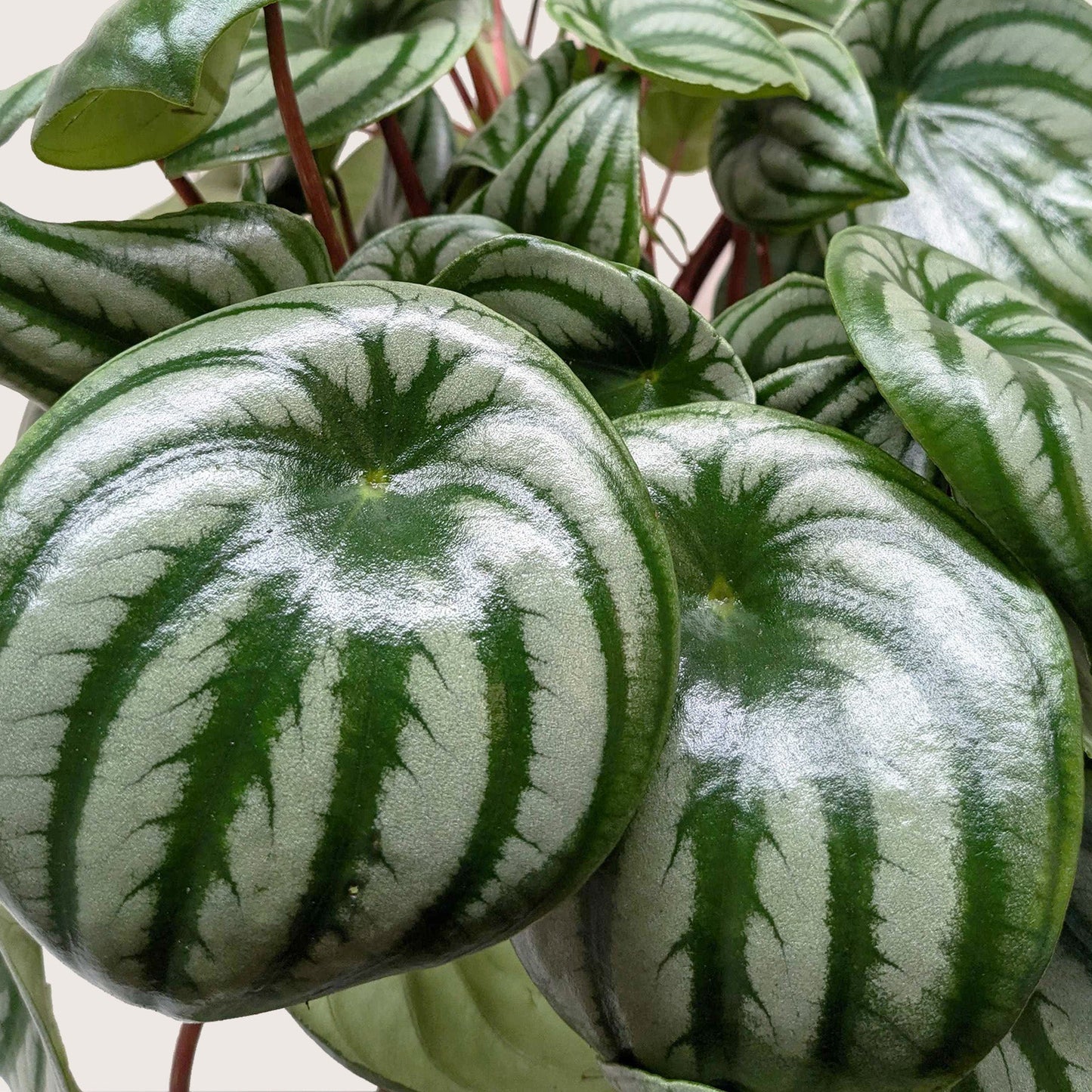
Peperomia Watermelon
Peperomia Watermelon
Couldn't load pickup availability
The Watermelon Peperomia is one of those plants where the name tells you everything. The leaves are round and striped in alternating shades of dark and light green in a pattern that looks unmistakably like the rind of a watermelon. It's a plant that makes people smile when they see it — not because it's trying to be cute, but because it genuinely looks like something from a different world.
Peperomia argyreia is compact, low-maintenance, and happy on a desk or shelf with moderate indirect light. The thick, slightly fleshy leaves store water, which means it tolerates the occasional missed watering without fuss. It stays small, grows slowly, and produces occasional slender flower spikes that are a pleasant bonus rather than the main attraction. The striped leaves are the main attraction.
This is a plant that earns a double-take every single time.
Why You'll Love It
The Watermelon Peperomia is one of the few plants where the common name is an asset — everyone who sees it immediately understands what they're looking at, and that recognition creates an instant connection. It's also one of the most photographable plants in any collection, which makes it a natural for a shelf or windowsill where it'll be seen regularly. The pattern is genuinely extraordinary for a plant this easy to grow.
Care at a Glance
- Light: Medium to bright indirect light preferred. The striping is most vivid in brighter conditions
- Water: Allow the top inch of soil to dry between waterings. Less is more
- Humidity: Tolerates average indoor humidity. No misting required
- Temperature: Prefers 65 to 80 degrees F. Keep away from cold drafts
- Growth: Slow to moderate. Stays compact — typically under 12 inches tall
- Skill level: Beginner-friendly. One of the easier patterned plants to grow
- Pet safety: Non-toxic to pets and humans
Good to Know
The Watermelon's thick leaf stems (petioles) can look dramatic when they emerge from the soil — they're longer and thinner than you might expect, and they hold the round leaves out at an angle that maximizes light exposure. This is normal and part of the plant's charm. Overwatering is the main risk; the leaves will start to look soft or limp if the soil stays wet too long. Let it dry out and it recovers quickly.
For more care tips, visit our Plant Care Library.
Share