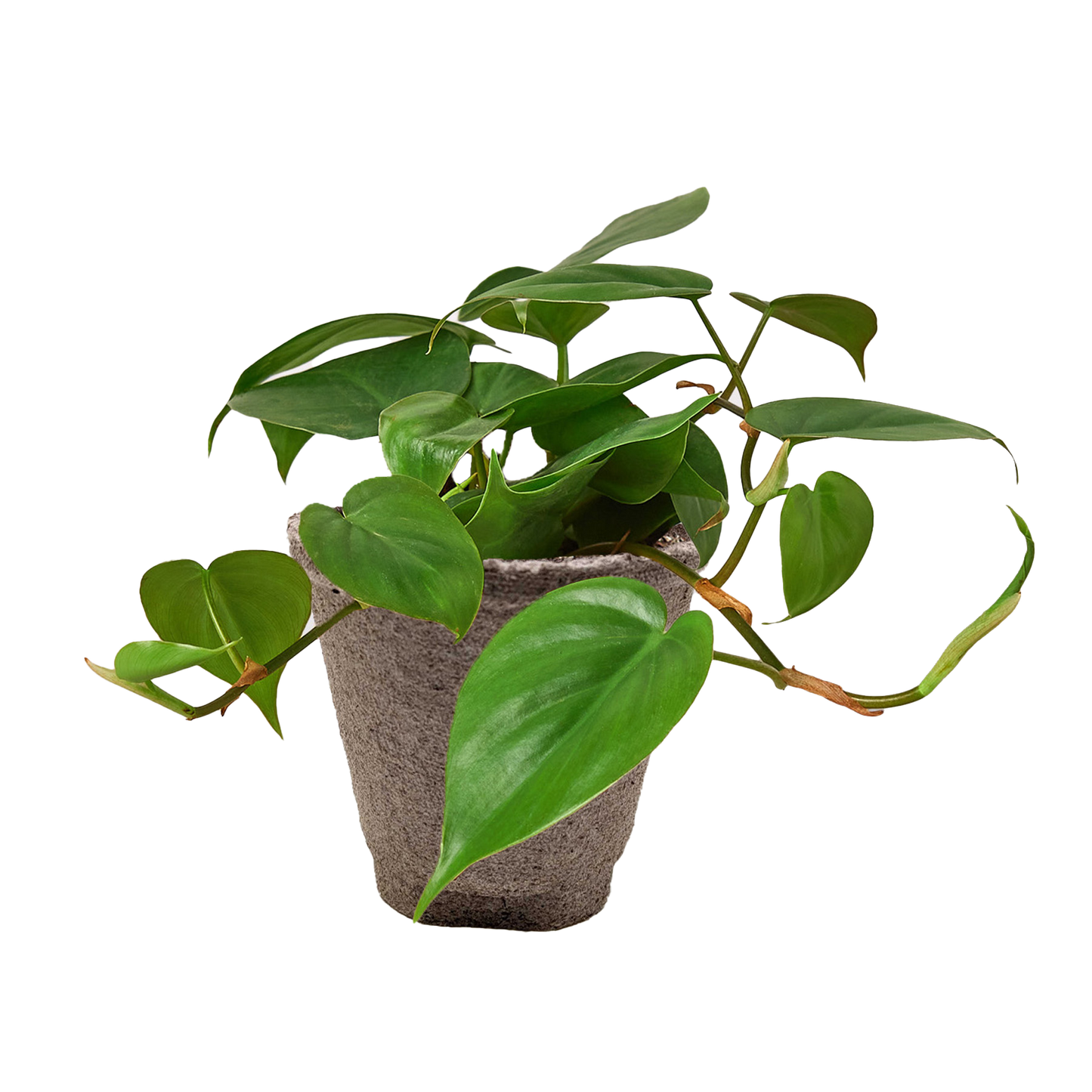
The Heartleaf Philodendron is the plant that got a lot of people into plants. It's forgiving in a way that builds confidence — it tolerates low light, bounces back from missed waterings, and produces new leaves with a generosity that makes you feel like you're doing something right even when you're barely trying. There's a reason it's been a staple of indoor spaces for decades.
Philodendron hederaceum trails or climbs with equal willingness. Let it hang from a shelf and the stems will cascade in long, elegant loops; give it a moss pole and it will climb toward the ceiling. The deep green, heart-shaped leaves are simple and beautiful, and the plant grows fast enough to give you visible results in a matter of weeks. It's the gateway Philodendron — and it stays in the collection long after you've moved on to harder plants.
This is the plant that proves you can do this.
Why You'll Love It
The Heartleaf is one of the fastest-growing and most propagatable plants available for indoor growing. A healthy, established plant will produce cuttings readily, and those cuttings root in water in a matter of weeks — making it one of the most shareable plants in your collection. For anyone just building their first plant collection, or looking for something reliable to fill space while they figure out the rest, there's nothing better.
Care at a Glance
-
Light: Low to bright indirect light. One of the best plants for lower light conditions
-
Water: Allow the top inch of soil to dry between waterings. Very forgiving if you miss one
-
Humidity: Tolerates average indoor humidity. Appreciates occasional misting
-
Temperature: Prefers 65 to 85 degrees F. Keep away from cold drafts
-
Growth: Fast. One of the fastest-growing easy-care houseplants available
-
Skill level: Beginner-friendly. One of the most forgiving plants you can own
-
Pet safety: Toxic if ingested. Keep away from pets and small children
Good to Know
The Heartleaf is one of the easiest houseplants to propagate — cut a stem just below a node, place it in water, and roots will appear within a couple of weeks. The plant also benefits from occasional trimming, which keeps it full and bushy rather than long and sparse. Trimmed stems can go straight into water for propagation, which means nothing is wasted.
For more care tips, visit our Plant Care Library.