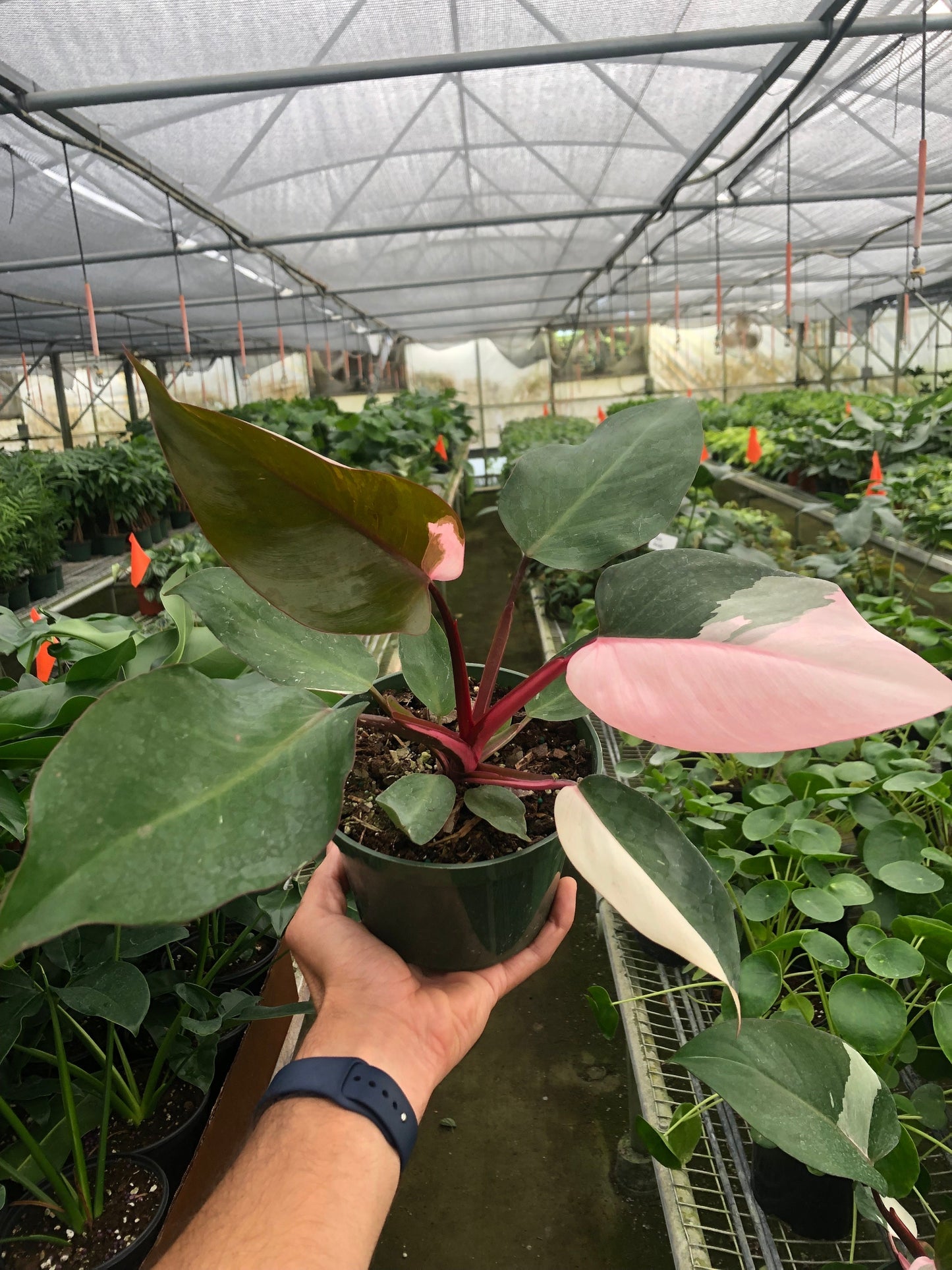
The Pink Princess is one of the most talked-about houseplants of the last few years, and the reason is immediately obvious. Its leaves are dark — a deep, glossy green or almost burgundy-black — and across that dark background, irregular patches of vivid bubblegum pink appear. Not blush, not pale rose. Pink. Bold, unapologetic, and completely natural. It's one of the most striking leaf colors in the plant world.
Philodendron erubescens 'Pink Princess' is a slow-growing climber that produces new leaves one at a time, each one a slightly different configuration of dark and pink. No two leaves are identical. On a large, established plant you'll have a range of tones across the foliage simultaneously — which creates a layered, dynamic look that photographs can't fully do justice to. Give it a moss pole or support and it will climb with a slow, deliberate elegance.
This is the plant that earns every bit of attention it gets.
Why You'll Love It
The Pink Princess is genuinely rare in the way it looks — there are other pink-leaved plants, but none that achieve the same contrast between deep dark foliage and vivid pink variegation. It's also the kind of plant that grows with you: each new leaf is an event, a surprise, a reason to check in. For anyone who wants a plant that's both beautiful and engaging over time, the Pink Princess is one of the best choices available.
Care at a Glance
-
Light: Bright indirect light is essential. The pink variegation is most vivid and extensive in good light
-
Water: Allow the top inch or two of soil to dry between waterings. Consistent but not excessive
-
Humidity: Appreciates moderate to high humidity. Misting or a pebble tray is beneficial
-
Temperature: Prefers 65 to 85 degrees F. Keep away from cold drafts
-
Growth: Slow. Each new leaf is a distinct event
-
Skill level: Intermediate. The pink variegation requires good light to maintain
-
Pet safety: Toxic if ingested. Keep away from pets and small children
Good to Know
The pink in the Pink Princess is light-dependent — in insufficient light, the plant will produce leaves with less pink and more green over time. Bright indirect light is where it performs best. If new leaves are coming in mostly green, move the plant to a brighter spot. Conversely, too much direct sun can bleach the pink sections. The balance is bright, indirect, and consistent. The plant will tell you quickly if the light isn't right.
For more care tips, visit our Plant Care Library.