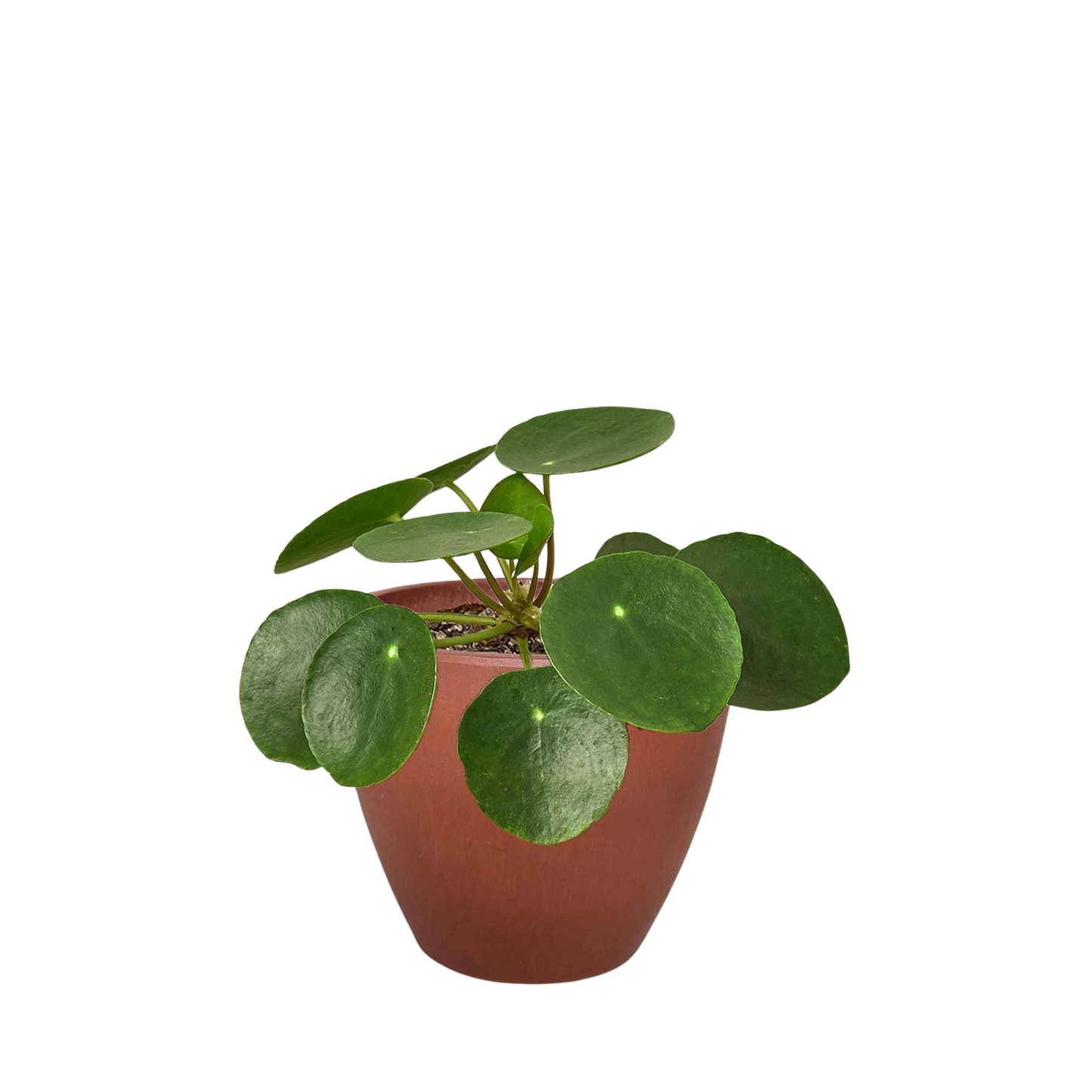
Pilea Peperomioides 'Chinese Money'
Pilea Peperomioides 'Chinese Money'
Couldn't load pickup availability
The Chinese Money Plant arrived in the West via a Norwegian missionary who brought cuttings back from China in the 1940s, and for decades it circulated only as cuttings shared between friends — it was nearly impossible to buy. That history of being passed hand to hand gives it an unusual warmth for a houseplant. Now that it's widely available, it's easy to forget how coveted it once was.
Pilea peperomioides is immediately recognizable: perfectly round, pancake-flat leaves on long, slender stems that radiate outward from a central point. It has a clean, graphic quality that reads beautifully in modern and minimal spaces. As the plant matures, it produces offshoots — little plantlets that push up from the soil and can be potted on or shared, continuing that original tradition.
This is a plant with a story, a look, and a habit of making friends.
Why You'll Love It
The Pilea is one of those plants that works everywhere — on a desk, a windowsill, a bookshelf, a bathroom counter. Its compact size and upright habit make it easy to place, and the circular leaves catch and reflect light in a way that feels almost playful. It's also one of the most shareable plants around: once it starts producing pups, you'll have more to give away than you know what to do with.
Care at a Glance
- Light: Bright indirect light preferred. Rotate regularly for even, symmetrical growth
- Water: Allow the top inch of soil to dry between waterings. Avoid overwatering
- Humidity: Tolerates average indoor humidity. No misting required
- Temperature: Prefers 60 to 80 degrees F. Keep away from cold drafts and heat vents
- Growth: Moderate. Produces offshoots (pups) from the base as it matures
- Skill level: Beginner-friendly. Forgiving and easy to read
- Pet safety: Non-toxic to pets and humans. A genuinely pet-safe choice
Good to Know
The Pilea will lean toward its light source — rotating the pot a quarter turn every week or two keeps the growth symmetrical and the shape tidy. When pups appear at the base, let them grow to a few inches tall before separating them with a clean cut just below the soil line. They root easily in water or well-draining potting mix.
For more care tips, visit our Plant Care Library.
Share