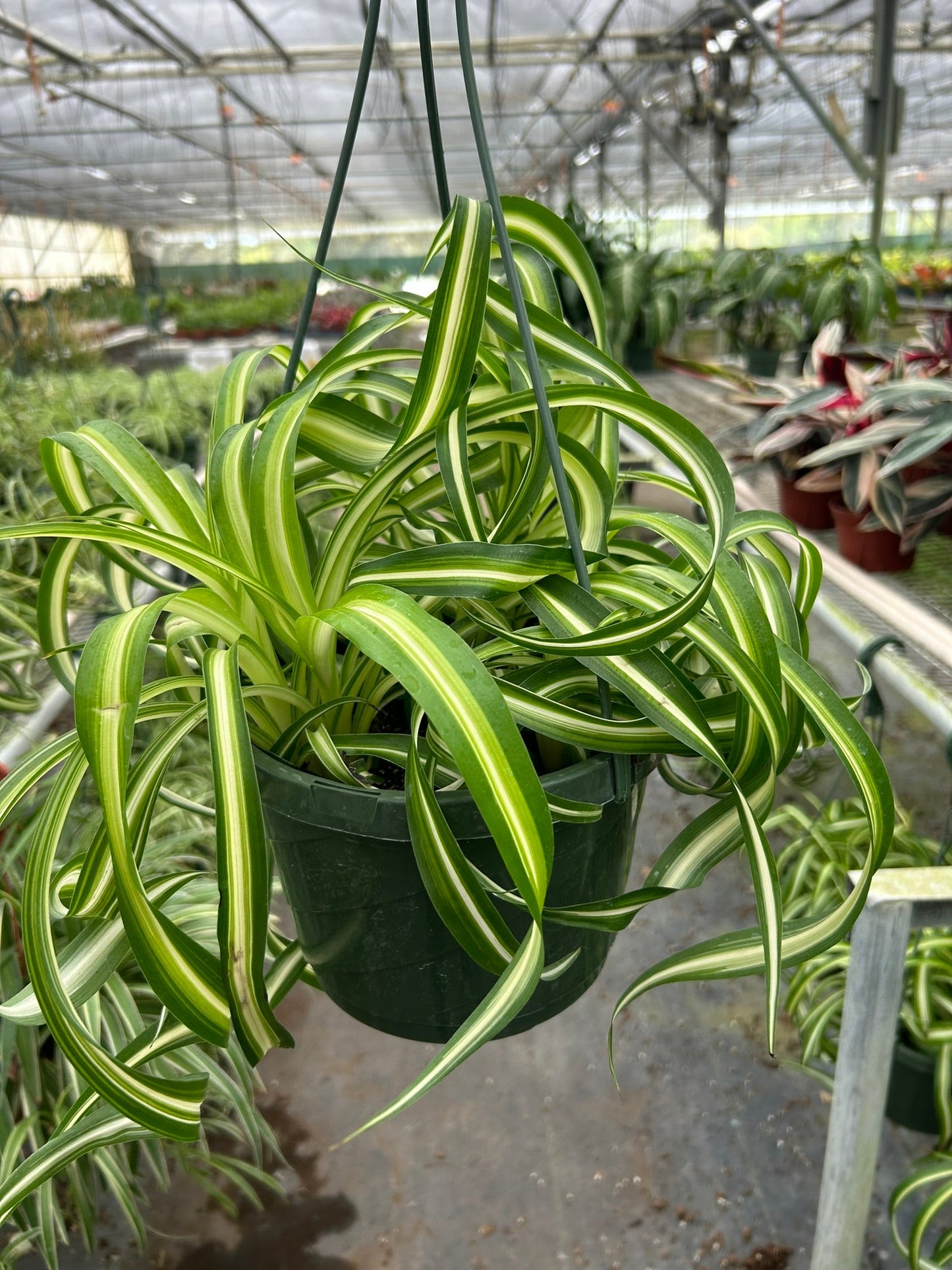
Spider Plant 'Bonnie'
Spider Plant 'Bonnie'
Couldn't load pickup availability
The Bonnie Spider Plant takes the classic Spider Plant and gives it a permanent wave. Its long, variegated leaves curl and spiral rather than arching straight, which gives it a more playful, animated quality than the standard variety. Where the classic Spider Plant is elegant, the Bonnie is cheerful. Both are wonderful — but the Bonnie is the one that makes you smile.
Chlorophytum comosum 'Bonnie' grows in the same generous, spreading way as all Spider Plants — producing long stems with small plantlets (spiderettes) that dangle and can be potted on to make new plants. The curled leaves catch the light differently at every angle, which keeps the plant interesting as it grows. The care is effortless: bright to low light, regular watering with a little drying out between, and very little else.
This is a plant with actual personality.
Why You'll Love It
The Bonnie's curled leaves give it a sculptural quality that flat-leaved plants simply don't have — the spiraling fronds catch light and create shadow in a way that makes the plant look different depending on where you're standing. It's also one of the best beginner plants available: forgiving, fast-growing, easy to propagate, and genuinely hard to kill. The spiderettes that appear with maturity are a bonus that keeps giving.
Care at a Glance
- Light: Low to bright indirect light. Very adaptable — one of the most light-tolerant houseplants
- Water: Allow the top inch of soil to dry between waterings. Forgiving of occasional lapses
- Humidity: Tolerates average indoor humidity. Appreciates occasional misting
- Temperature: Prefers 60 to 80 degrees F. Keep away from cold drafts
- Growth: Moderate to fast. Produces spiderettes on long arching stems with maturity
- Skill level: Beginner-friendly. One of the most forgiving houseplants you can own
- Pet safety: Non-toxic to pets and humans
Good to Know
Like all Spider Plants, the Bonnie is sensitive to fluoride in tap water — brown leaf tips are the first sign. Switching to filtered or distilled water, or letting tap water sit overnight before using, addresses the problem before it starts. Spiderettes can be propagated by placing them in a small glass of water until roots develop, then potting in moist potting mix. They establish quickly and make excellent gifts.
For more care tips, visit our Plant Care Library.
Share