Stromanthe Triostar
Stromanthe Triostar
Couldn't load pickup availability
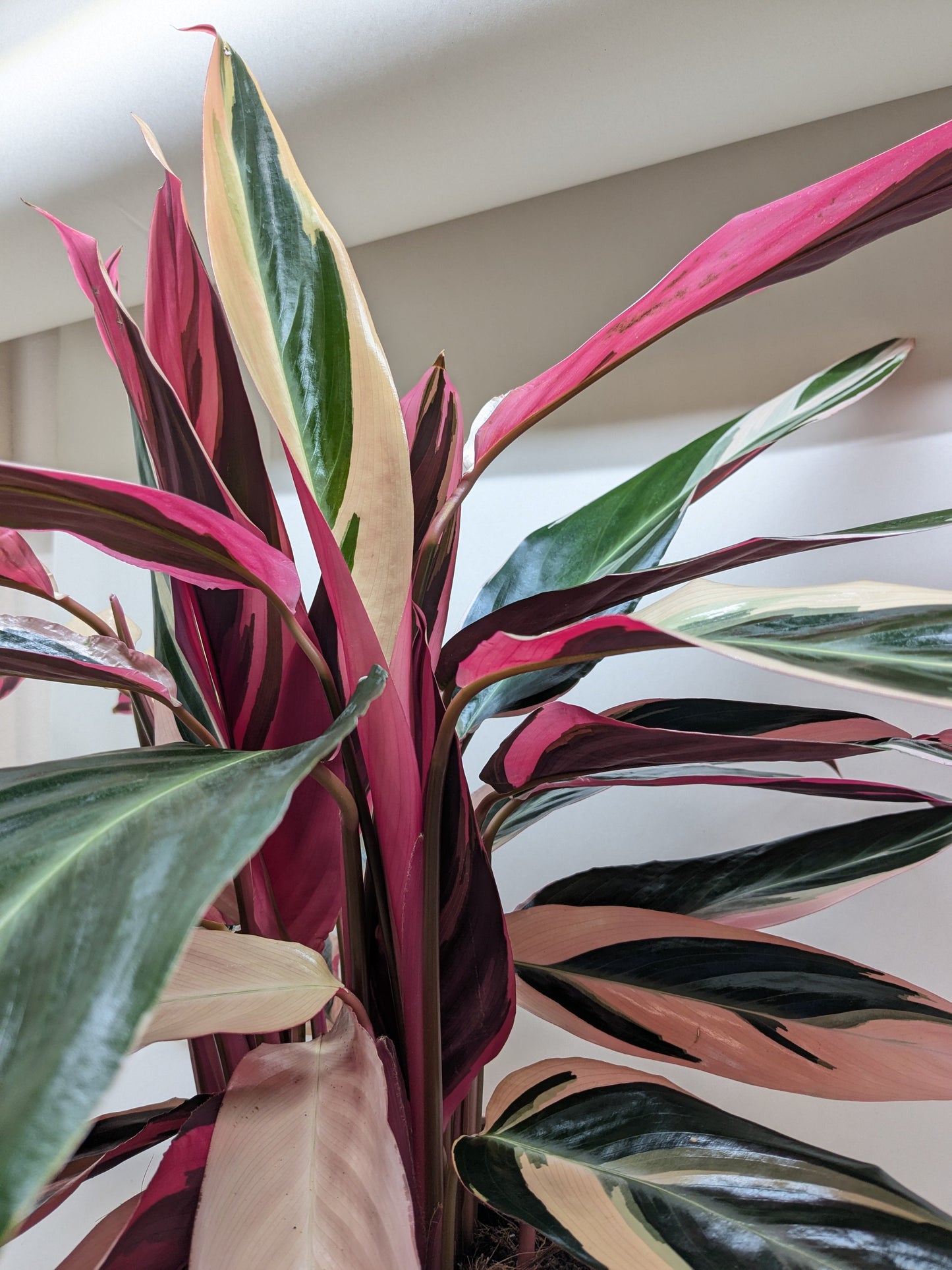
The Stromanthe Triostar is one of the most flamboyant houseplants you can own while still being considered tasteful. Each leaf is a different combination of deep green, cream, white, and pink — variegated in a pattern that looks almost hand-painted, with the pink becoming more pronounced on the undersides. No two plants look exactly alike, and no two leaves on the same plant are identical. It's a plant that feels bespoke.
Stromanthe sanguinea 'Triostar' is part of the prayer plant family, which means it moves — folding its leaves upward at night and opening them again in the morning. Given that the undersides are a vivid pink-to-magenta, this movement creates a color shift that's genuinely dramatic in a well-lit space. The care is more considered than a Pothos, but the reward is proportionally greater.
This is a plant for people who want something genuinely extraordinary.
Why You'll Love It
The Triostar is one of the most colorful foliage plants available for indoor growing — and it achieves that color with zero flowers, purely through leaf variegation. The combination of four tones in a single leaf, plus the daily movement and the color shift between top and underside, makes it one of the most visually dynamic plants you can keep. In a bright spot with good humidity, it becomes genuinely spectacular.
Care at a Glance
- Light: Bright indirect light preferred. More light = more vivid variegation and pink tones
- Water: Keep soil consistently moist. Allow the surface to dry slightly between waterings
- Humidity: Loves high humidity. A humidifier, pebble tray, or bathroom placement significantly improves performance
- Temperature: Prefers 65 to 80 degrees F. Sensitive to cold drafts and sudden temperature changes
- Growth: Moderate. Can reach 2 to 3 feet tall in good conditions
- Skill level: Intermediate. Rewards consistency and punishes neglect
- Pet safety: Non-toxic to pets and humans
Good to Know
Brown leaf edges are the Triostar's primary complaint, and they're almost always caused by low humidity or inconsistent watering. Filtered water helps significantly — tap water with fluoride or chlorine can cause tip burn over time. In low humidity environments, the plant will decline gradually; improving humidity reverses this within a few weeks. The more you give this plant, the more it gives back.
For more care tips, visit our Plant Care Library.
Share