Syngonium Strawberry
Syngonium Strawberry
Couldn't load pickup availability
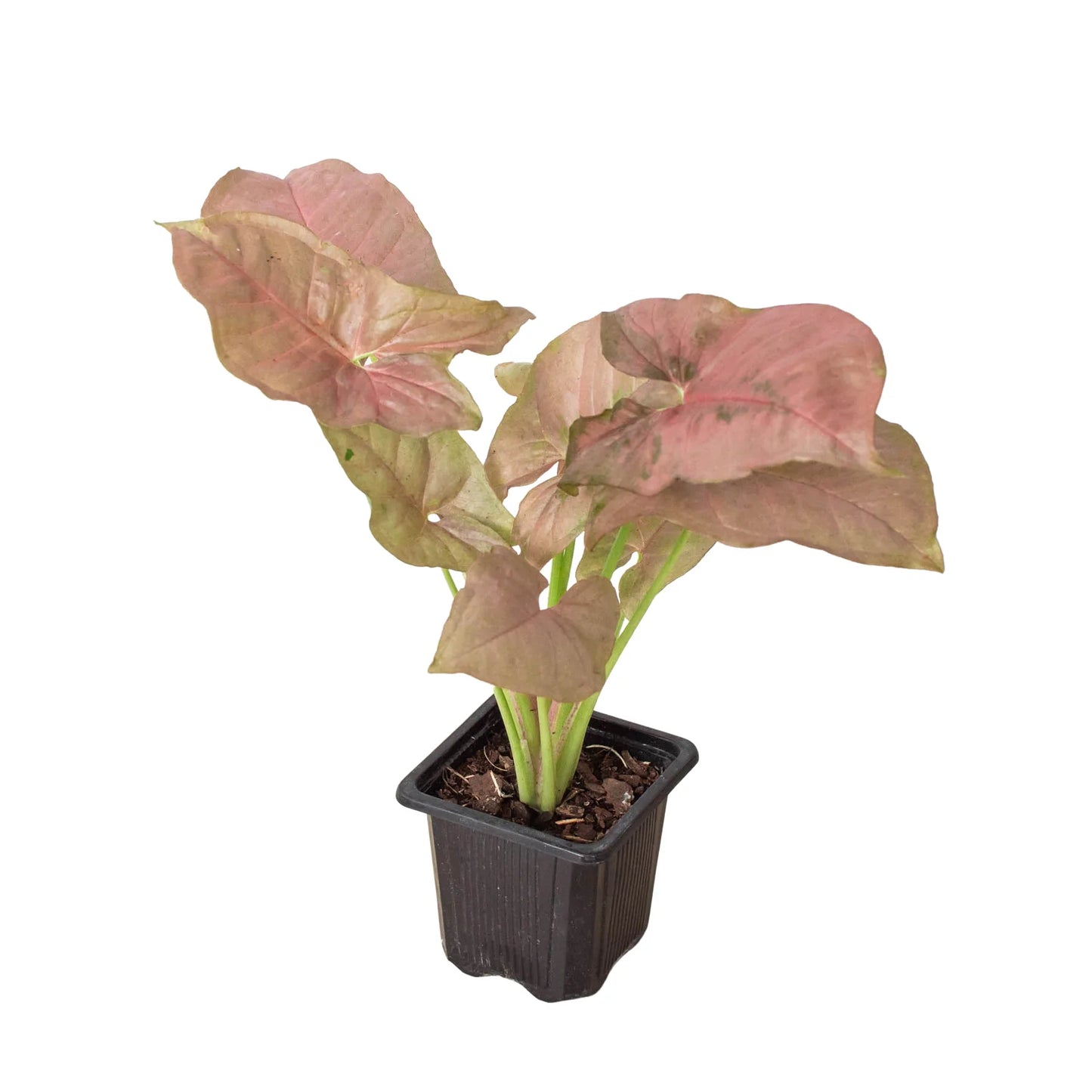
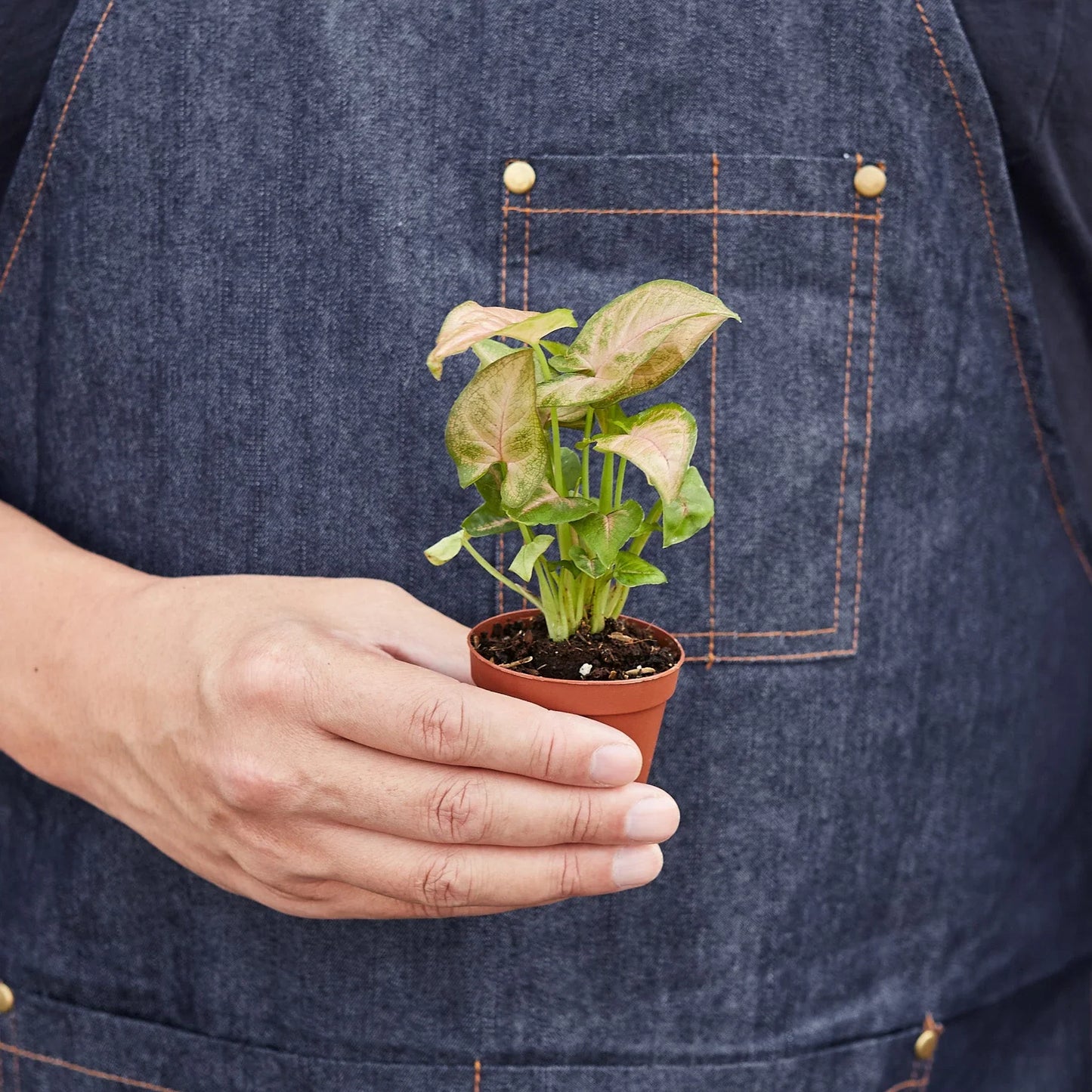
The Syngonium Strawberry is a pink plant that doesn't try too hard. Its arrowhead-shaped leaves come in a warm, rosy blush with soft green edges — subtle enough to work in any room, distinctive enough to be the thing people notice when they walk in. It has an easy confidence about it.
Syngonium podophyllum 'Strawberry' is a compact grower that's well-suited to shelves, side tables, or anywhere you want a touch of color without a lot of drama. As it matures, it begins to trail gently — which only adds to its appeal. The care is straightforward: consistent indirect light keeps the pink tones at their most vivid, and it's forgiving enough to handle the occasional missed watering without complaint.
This is a plant that brings warmth to a space without demanding much in return.
Why You'll Love It
Pink houseplants are increasingly sought after, but many are either expensive, temperamental, or both. The Syngonium Strawberry is neither. It's approachable, adaptable, and genuinely beautiful — the kind of plant that earns its place on a shelf without requiring special treatment. For anyone building a collection with some color in it, this is one of the easiest ways to do it.
Care at a Glance
- Light: Bright indirect light preferred. More light = more vivid pink coloring. Tolerates medium light
- Water: Allow the top inch of soil to dry between waterings. Consistent moisture preferred but very forgiving
- Humidity: Appreciates higher humidity but tolerates average indoor conditions well
- Temperature: Prefers 60 to 85 degrees F. Keep away from cold drafts
- Growth: Moderate. Compact upright habit that begins to trail with maturity
- Skill level: Beginner-friendly. One of the easier pink plants to care for
- Pet safety: Toxic if ingested. Keep away from pets and small children
Good to Know
The pink tones in the Strawberry are light-dependent — the more indirect light it receives, the warmer and more vivid the color. In lower light conditions, the leaves tend toward a softer, more muted green. If the color starts to fade, move it closer to a window before adjusting anything else. Pinching back the stems as the plant grows encourages a bushier, more compact shape.
For more care tips, visit our Plant Care Library.
Share